Activate the Yeast: In a small bowl or measuring cup, combine the warm milk, sugar, and yeast, stirring gently to dissolve. Let the mixture sit for 5–10 minutes in a warm, draft-free spot until it becomes foamy and bubbly, indicating that the yeast is alive and active. If it doesn’t foam, your yeast may be old, and you should start over with a fresh packet to ensure the bread rises properly.
Mix the Dough: In a large mixing bowl or the bowl of a stand mixer fitted with a dough hook, combine the flour and salt. Make a well in the center and pour in the foamy yeast mixture, melted butter, and the egg if using. Mix on low speed or with a wooden spoon until the ingredients come together into a shaggy, sticky mass, ensuring all the flour is incorporated from the sides of the bowl.
Knead Until Smooth: Turn the dough out onto a lightly floured surface and knead by hand for 8–10 minutes, or use the stand mixer on medium-low speed for 5–7 minutes. The dough is ready when it is smooth, elastic, and slightly tacky but not sticky, passing the "windowpane test" where you can stretch a small piece thin enough to see light through it without tearing.
First Rise (Bulk Fermentation): Lightly grease a large bowl with oil or butter, place the dough inside, and turn it once to coat the top. Cover the bowl with plastic wrap or a damp kitchen towel and let it rise in a warm, draft-free area for 1–1.5 hours, or until it has doubled in size. This slow fermentation develops the flavor and texture, so be patient and avoid rushing this crucial step.
Shape the Loaf: Punch down the risen dough gently to release any large air bubbles, then turn it out onto a lightly floured surface. Shape it into a tight log by folding the edges into the center and rolling it up, pinching the seams closed to create tension. Place the shaped loaf seam-side down into a greased 9x5-inch loaf pan, tucking the ends under for a neat appearance.
Second Rise (Proofing): Cover the loaf pan with a clean kitchen towel or plastic wrap and let it rise again for 30–45 minutes, or until the dough crests about an inch above the rim of the pan. Preheat your oven to 375°F (190°C) during the last 15 minutes of rising to ensure it is fully heated when the bread is ready to bake, creating the best oven spring.
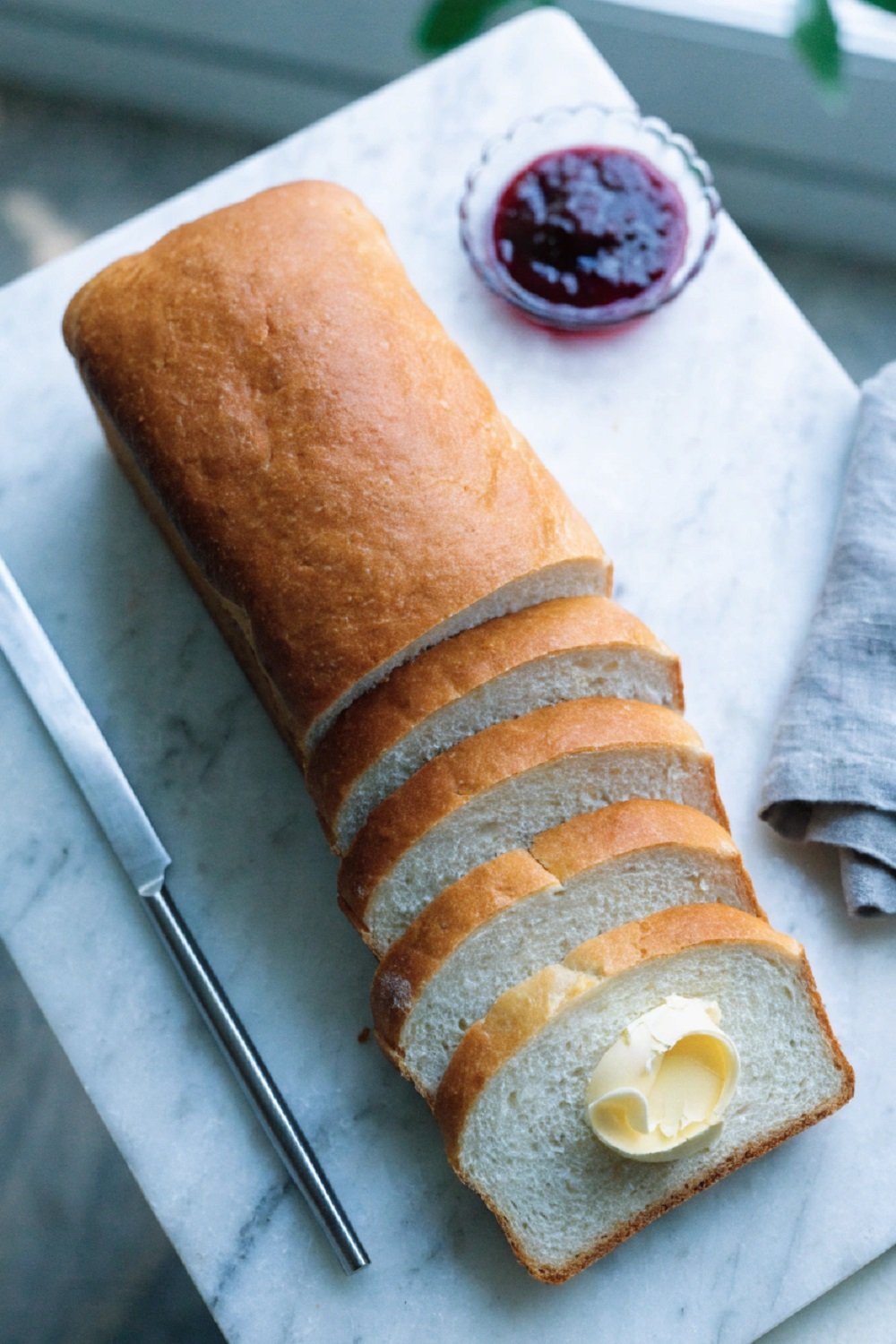
Bake to Golden Perfection: If using, brush the top of the loaf with the egg wash for a shiny, golden crust. Bake in the preheated oven for 30–35 minutes, rotating the pan halfway through for even browning. The bread is done when it is deep golden brown on top and sounds hollow when tapped on the bottom, or when an instant-read thermometer inserted into the center reads 190°F (88°C).
Cool and Brush with Butter: Remove the bread from the oven and immediately turn it out onto a wire cooling rack. Brush the top and sides generously with melted butter while it is still hot to soften the crust and add flavor. Let the loaf cool completely before slicing to prevent the crumb from becoming gummy, allowing the structure to set properly for the perfect slice.